



A pink-collar job is a kind of work that many women do. These jobs are about helping people, working in offices, or giving services. Some examples are being a nurse, a teacher, taking care of kids, working at a desk, or talking to customers. The name “pink-collar” started a long time ago to show that these jobs are different from jobs that need heavy work (called blue-collar) or jobs where people wear suits (called white-collar). Pink-collar jobs are very important, but sometimes they don’t get as much money or respect. Still, people in these jobs do great work and help our towns and the country a lot.
Examples of Pink-Collar Jobs

Pink-collar jobs are types of work usually done by women, like helping others, providing services, or doing office tasks. These jobs are very important for society and the economy because they offer support that helps communities stay healthy and stable.
“My mother is a nurse; she always told me that pink-collar jobs are not just work but a way to improve people’s lives. Her dedication and love for patients inspire me too.“
According to the U.S. Bureau of Labor Statistics, the top five pink-collar jobs in 2023 were:
- Preschool and kindergarten teachers
- Dental hygienists
- Speech-language pathologists
- Dental assistants
- Childcare workers
16 Examples of Pink Collar Jobs
| S.No | Job Title | Short Description |
|---|---|---|
| 1 | Nurse | Educates students, develops curricula, and fosters learning environments. |
| 2 | Teacher | Supervises and cares for children, ensuring safety and development. |
| 3 | Massage Therapist | Performs therapeutic massages to alleviate pain, promote relaxation. |
| 4 | Child Care Worker | Cleans teeth, examines oral health, and educates patients on care. |
| 5 | Esthetician | Offers skincare treatments, including facials and hair removal. |
| 6 | Hair Stylist | Cuts, styles, and colors hair to meet client preferences. |
| 7 | Dental Hygienist | Manages office tasks, schedules appointments, and supports operations. |
| 8 | Speech-Language Pathologist | Diagnoses and treats speech and language disorders. |
| 9 | Dental Assistant | Assists dentists during procedures, manages patient records. |
| 10 | Preschool Teacher | Teaches foundational skills to young children in early education. |
| 11 | Medical Assistant | Performs administrative and clinical tasks in healthcare facilities. |
| 12 | Home Health Aide | Provides in-home care for patients with chronic illnesses. |
| 13 | Social Worker | Assists individuals and families in overcoming challenges, accessing resources. |
| 14 | Administrative Assistant | Manages office tasks, schedules appointments, supports operations. |
| 15 | Customer Service Representative | Interacts with customers to address inquiries, resolve issues. |
| 16 | Flight Attendant | Ensures passenger safety and comfort during flights. |
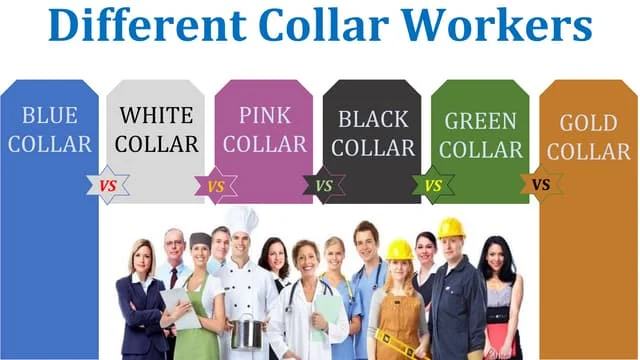
Pink Collar vs White Collar vs Blue Collar
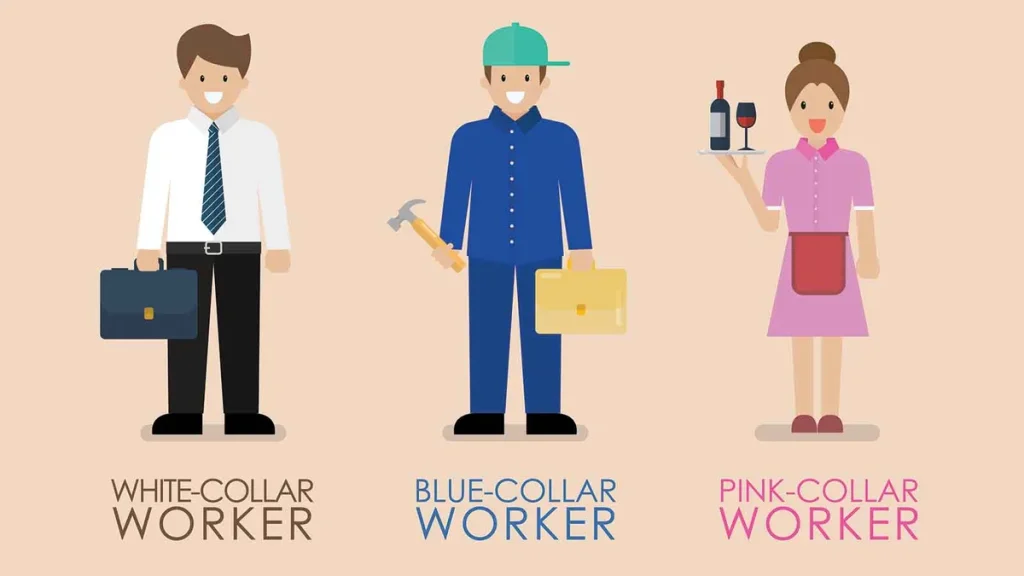
Pink Collar Jobs
Pink-collar jobs are jobs that many women have done for a long time. These jobs are about helping and taking care of people. Some examples are nurses, teachers, people who take care of kids, or those who cut hair and do beauty work. People in these jobs talk to others a lot and are kind and helpful. They sometimes work at night or on weekends, too. Long ago, these jobs did not pay much, and it was hard to grow in these careers. But now, things are changing. Some men are also doing these jobs, and people are starting to see how important and special these jobs are.
White Collar Jobs
White-collar jobs are office jobs where people do work like thinking, planning, or using computers. Some examples are accountants, lawyers, engineers, computer workers, and company bosses. These jobs usually need more studies or special training. People in white-collar jobs often get good pay and are seen as having important work. Many of them can even work from home. But now, machines and smart computers (like robots or AI) are starting to do some of the easier jobs, so people have to learn new things to keep their work safe.
Blue Collar Jobs
Blue-collar jobs are jobs where people do hands-on work using tools or machines. Some examples are plumbers, electricians, builders, mechanics, and factory workers. These jobs usually pay by the hour, and sometimes people can work extra hours to earn more money. The work happens in places like workshops, outside, or factories. Many blue-collar workers have strong job protection and groups called unions that help them. Lately, more young people want these jobs because they pay well and are steady jobs that last a long time.
Pink Collar Worker Definition

A pink-collar worker is someone who usually works in jobs traditionally done by women. These jobs often include caregiving, office work, or service tasks. The term “pink-collar” was created to describe these kinds of roles, which are often paid less and given less importance compared to blue-collar (manual labor) and white-collar (professional or office) jobs.



“The idea of pink-collar work started in the mid-1900s to describe jobs mostly held by women. These jobs were often seen as similar to traditional household duties and were usually paid less with a lower status than jobs done mostly by men. Although there has been some improvement over time, many pink-collar jobs still struggle with issues like unfair treatment based on gender and lower wages.”
In recent years, people have started to better appreciate the importance of pink-collar jobs. There are ongoing efforts to close the pay gap, make working conditions better, and support gender equality in these fields. Also, more men are joining jobs that were once mostly done by women, which is helping to break old ideas about gender roles and making these occupations more diverse.
History of Pink-Collar Jobs

The term “pink-collar jobs” was first introduced in the 1960s by sociologist William J. Baumol to describe jobs mainly held by women, like secretaries, nurses, and teachers. These jobs usually had lower pay and fewer chances to move up compared to jobs mostly done by men.
‘Pink-collar jobs are the backbone of our society, but they deserve more respect and better pay.’ This still rings true today.”
Louise Kapp Howe
In the 1970s, social critic Louise Kapp Howe helped make the term more popular. She pointed out that these jobs were often seen as an extension of women’s traditional home duties and were not valued enough, even though they were very important for society.
During World War II (1940–1945), many women started working to fill the jobs left open by men who went to fight in the war. This led to a big increase in women working in different fields, including pink-collar jobs.
Although there has been some improvement over time, many pink-collar jobs still face problems like gender bias and unequal pay. But today, more people recognize how important these roles are, and there are ongoing efforts to fix these issues and promote fairness between men and women at work.
Pink Ghetto Meaning
The term “pink ghetto” means that many women work in jobs that don’t pay much and are not valued a lot. These jobs are called pink-collar jobs and include things like taking care of people, helping in offices, or working in service jobs.
Women often work in certain kinds of jobs, which means they don’t get to choose many different kinds of work. These jobs usually pay less money than jobs where more men work. Women in these jobs also find it hard to get better or bigger jobs because of unfair treatment. The idea of the pink ghetto helps us understand that even though things have gotten better, many women still face problems at work and don’t get the same chances as men.
“Pink-collar jobs may not always get the spotlight they deserve, but those who work in them are true heroes, shaping lives and communities every day. Keep believing in your power to make a difference.”
Difference between pink-collar and white collar jobs
| Aspect | Pink-Collar Jobs | White-Collar Jobs |
|---|---|---|
| Work Environment | Service or caregiving settings | Office or professional settings |
| Common Roles | Nurses, teachers, childcare workers | Lawyers, engineers, IT professionals |
| Education Level | Varies; often less formal | High; typically requires a degree |
| Income Potential | Moderate to low | High |
| Gender Representation | Predominantly female | Balanced or male-dominated |
| Job Stability | Often stable; some roles in high demand | Varies; some roles susceptible to automation |
Highest Paying Pink-Collar Jobs
- Dental Hygienist
- Nurse Practitioner
- Educational Administrator
- Social Worker
- Corporate Trainer
- Speech-Language Pathologist
- Preschool and Kindergarten Teacher


Pink-Collar Jobs: Tips for Managing
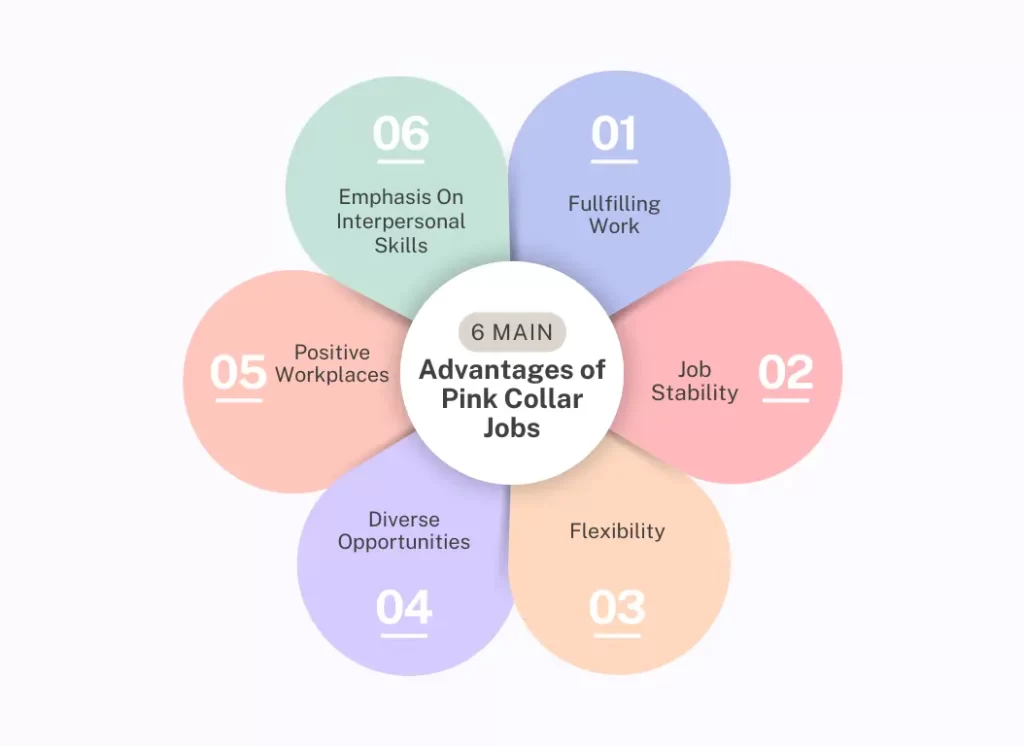
To manage pink-collar jobs well, people need to understand the special problems these jobs have and use smart ideas. One good way is to choose workers based on what they can do, not just their certificates. This helps give fair chances to many different people. It’s also important to make a nice place to work, with things like flexible hours and help for taking care of kids. This makes workers happy and want to stay. Using words that don’t show boys or girls only helps get more people to apply. Giving time off for moms and dads and flexible work times helps everyone feel important and cared for. When hiring, it’s good to ask questions that show what people can do, not just what they learned in school. All these ideas help workers grow and feel good in their jobs.
FAQs about Pink Collar Jobs
What jobs are considered pink-collar today?
Jobs in caregiving, education, administrative support, and service sectors. Examples include nurses, teachers, childcare workers, and hair stylists.
Why are some jobs called pink jobs?
Some jobs are called pink-collar jobs because they were historically dominated by women. These roles typically involve service, caregiving, or administrative work. The term “pink” reflects the traditional association with femininity.
How are pink-collar jobs different from blue-collar jobs?
Pink-collar workers focus on service and interpersonal work, often in offices or care settings. Blue-collar work involves manual labor and skilled trades.
Are pink-collar jobs still relevant in modern times?
Yes, pink-collar jobs are still very important today, especially in healthcare, education, and customer service, where caregiving and support roles remain in high demand.
Do men also work in pink-collar jobs?
Yes, men also work in pink-collar jobs today. Fields like nursing, teaching, social work, and administrative roles increasingly include male workers. Gender diversity in these professions is growing, challenging traditional stereotypes.
