


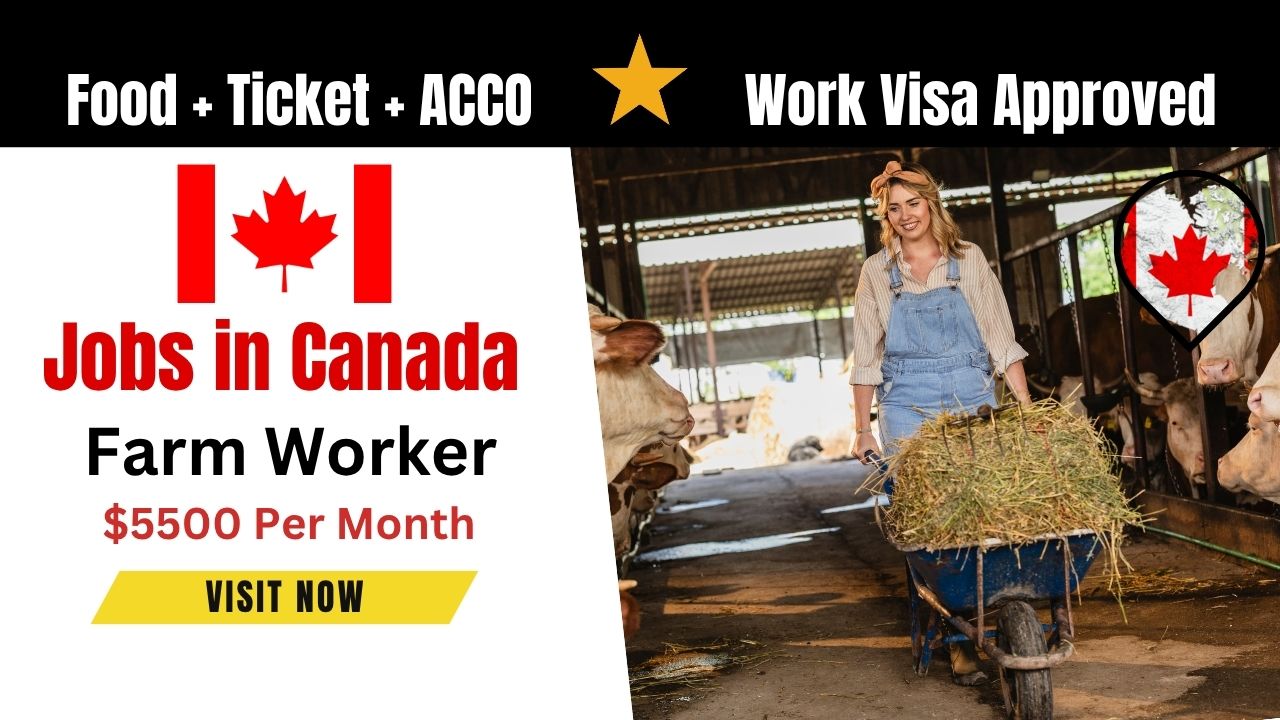
Canada, a country known for its strong economy and high quality of life, is facing a major need for skilled and experienced workers in its important sectors, especially in agriculture, manufacturing, and logistics. This shortage is so serious that many Canadian companies are looking outside the country to hire the people they need.
This presents a real chance for workers with the right skills to get a stable, well-paying job. Importantly, many of these companies are willing to take the steps needed to support a work permit or visa for the right international candidate. This article will explain the process clearly, detail the jobs most in demand, and give you the realistic, verified information you need to start your application journey.
Section 1: Introduction
Canada’s industries, especially farming and production, are growing, but the number of available Canadian workers is not keeping up. This lack of available local workers has created a strong demand for employees from around the world.
This situation means:
- Stability: The job market in these sectors is stable and reliable for the long term.
- Good Pay: Companies must offer competitive, high wages to attract the best talent.
- Visa Help: A crucial point is that a job offer from an approved Canadian employer is often the first and most important step to getting a work visa. Companies that need workers badly are ready to go through the official government process to get the right to hire a foreign worker.
Section 2: Visa and Immigration Basics Process and How to Apply
Securing a job in Canada as a foreign worker generally starts with getting the right to work, which is mainly done through a work permit. For most of the jobs listed in this article, the most common way to get a work permit is through a program that requires a valid job offer supported by a Canadian employer.
How to Get a Work Permit: The Main Steps
The most common path for an employer to hire a foreign worker for these jobs is through the Temporary Foreign Worker Program (TFWP). This program’s main purpose is to allow employers to hire foreign workers when no Canadians or permanent residents are available to do the job.
The most important step is called the Labour Market Impact Assessment (LMIA):
- LMIA Application: The Canadian employer must apply to the government for an LMIA. The LMIA is a document that shows the employer tried to hire Canadians but could not find anyone suitable, and that hiring a foreign worker will have a neutral or positive effect on the Canadian job market.
- Job Offer and LMIA Letter: If the government approves the application, the employer receives a positive LMIA and then gives a copy, along with a formal job offer, to the foreign worker.
- Work Permit Application: The foreign worker then uses the positive LMIA letter, the job offer, and other necessary documents to apply for a Temporary Work Permit at a Canadian embassy, consulate, or online.
Important Note: The LMIA process is done and paid for by the employer. As a worker, you should never pay an employer or a recruitment agency to get a job offer or an LMIA. The only fees you should pay are the official, small fees to the Canadian government for processing your work permit application.
Immigration to Stay Longer (Permanent Residence)
Some of these high-demand jobs, especially in agriculture, also have specific ways for workers to eventually become permanent residents of Canada.
- Agri-Food Immigration Pilot: This program gives a path to permanent residence for experienced, non-seasonal foreign workers in specific farm and food processing jobs. You must have at least 12 months of full-time, non-seasonal Canadian work experience in one of the approved jobs.
- Provincial Nominee Programs (PNP): Every province in Canada has its own immigration programs designed to select workers who meet the specific needs of their local job market. Many provinces, like Alberta, Saskatchewan, and Ontario, have streams that target skilled trades and farming workers. If a province “nominates” you, it greatly speeds up your application for permanent residence.
For Official Information and Details on the Process:
- Temporary Foreign Worker Program (LMIA): For details on how companies can apply for an LMIA, check the official source: Hire a temporary foreign worker with a Labour Market Impact Assessment – Canada.ca.
- Agri-Food Immigration Pilot: To check if your specific job and experience qualify for this pathway to permanent residence, review the official program rules: Agri-Food Pilot – Canada.ca.
Job Role 1: Farm Worker (General)
Farm Workers are essential for Canada’s large and important agriculture sector. These jobs involve hands-on work in crop or animal production, which is a major part of the Canadian economy.
| Detail | Description |
| Designation | Farm Worker (General) |
| Main Duties | Duties involve planting, irrigating, cultivating, and harvesting crops (fruits, vegetables, grain). This can also include operating farm machinery, cleaning and preparing barns and pens, feeding and caring for livestock, and general maintenance of the farm property. |
| Experience/Skill Requirements | No formal degree is usually needed, but at least 1-2 years of proven, on-the-job experience working on a farm is a major requirement. Must have good physical fitness, be willing to work outdoors in various weather, and have the ability to follow directions carefully. |
| Most Needed In | Provinces with major agricultural production like Ontario (especially Southwestern Ontario), Alberta, Saskatchewan, and British Columbia (Fraser Valley for greenhouses). |
| Estimated Salary Range (CAD) | $16.00 – $22.00 per hour (Wages vary greatly by province and whether the job is seasonal or year-round. This is generally an hourly wage.) |
Want to apply for this job? Fill the Application Form by clicking this link here to fill the Application Form
Section 3: The Application Process
To succeed in getting one of these high-demand Canadian jobs, your application must be presented in a way that Canadian employers and government reviewers will understand and trust.
Creating Your Canadian-Style Resume (CV)
- Focus on Facts: Your resume should be clear, concise, and focused on facts. Do not include personal information like your age, date of birth, or photo.
- List Practical Experience: For each past job, list your main responsibilities, and, more importantly, your achievements. For example, instead of “Operated a welding machine,” say “Welded and assembled over 50 structural steel components with a 99% quality pass rate.”
- Be Clear About Tools and Certifications: Clearly list every piece of equipment you know how to use (e.g., MIG, TIG, SMAW welding processes, specific forklift models, or CNC programming language).
The Importance of Trade Certification
For skilled trades jobs like Welder or Truck Mechanic, having an official, government-recognized certification is a huge advantage.
- Red Seal Certification: This is the Canadian standard for many skilled trades. If you have a trade qualification from your home country, you should start the process of getting its equivalent recognized in Canada. This proves your skill is at the same high level as a Canadian-trained professional.
Proving Your Work Experience
Employers and the government need to know that your experience is real. Collect all possible documents:
- Letters of reference from past employers that detail your start and end dates, your job title, and your duties.
- Copies of vocational school diplomas or trade certificates.
Job Role 2: Welder
Welders are needed everywhere in Canada, from building infrastructure and pipelines to manufacturing machinery and equipment. It is one of the most consistently in-demand skilled trades.
| Detail | Description |
| Designation | Welder |
| Main Duties | Joining metal parts using various welding techniques (MIG, TIG, SMAW). Duties include reading blueprints and engineering drawings, inspecting welds for quality, and preparing materials for fabrication. Welders work in construction, manufacturing plants, shipyards, and repair shops. |
| Experience/Skill Requirements | At least 3 years of verifiable experience. Must be proficient in multiple welding types and able to work with different materials like steel and aluminum. Having any recognized trade certification or technical school diploma is a significant benefit. |
| Most Needed In | Alberta (Oil and Gas/Pipeline infrastructure), Ontario (Manufacturing and industrial fabrication), and British Columbia (shipbuilding and industrial construction). |
| Estimated Salary Range (CAD) | $25.00 – $40.00 per hour (Highly experienced and certified Welders in resource-heavy areas can earn more.) |
If you are a skilled Welder looking for a job with visa support, you can submit your details here for the Job Application Process
Section 4: Life and Benefits in Canada
Moving to a new country is a big decision, and Canada offers many benefits that make it an attractive place to work and live for you and your family.
A Safe and Fair Workplace
Canadian workers are protected by strong labour laws that cover all employees, whether they are citizens or temporary foreign workers. These laws ensure:
- Fair Wages: You must be paid the amount stated in your job contract, which must meet or be above the provincial minimum wage.
- Worker Rights: You have the right to a safe workplace, to be protected against unfair dismissal, and to receive regular breaks and vacation time.
- Paid Holidays: Full-time employees receive paid time off for public holidays.
Access to Healthcare
Once you start working in Canada, you become eligible for the provincial public healthcare system, which covers most basic medical services, including visits to the doctor and hospital care. This world-class medical system is a major benefit for you and your family.
Standard Job Benefits
Typical jobs in manufacturing and logistics often include an employment package with:
- Paid Vacation: Workers receive paid time off, usually starting at two weeks per year.
- Health Coverage: While the public system covers essential medical care, many employers offer additional private insurance for things like dental care, eye care, and prescription medication.
- Pension/Retirement Savings: Many jobs offer contributions to a pension plan to help you save for the future.
Job Role 3: Heavy-Duty Truck Mechanic
The transportation and logistics industry is critical to Canada, a country that relies on trucks to move goods across long distances. This makes experienced Heavy-Duty Truck Mechanics highly sought after to keep the massive fleet of trucks running safely.
| Detail | Description |
| Designation | Heavy-Duty Truck Mechanic |
| Main Duties | Performing maintenance, repairs, and diagnostics on large commercial trucks, trailers, and heavy equipment. This includes working on engines, brake systems, transmissions, and electrical systems. |
| Experience/Skill Requirements | 3 to 5 years of professional experience with diesel engines and large vehicle maintenance. Trade certification (like a 310T license in Ontario or equivalent) is highly preferred by employers. Must be skilled in using diagnostic tools and reading repair manuals. |
| Most Needed In | Ontario (around major cities like Toronto and Hamilton), British Columbia (Vancouver and Prince Rupert for port logistics), and Alberta (Calgary and Edmonton for oil and gas/freight). |
| Estimated Salary Range (CAD) | $60,000 – $95,000 per year (This job is often paid as an annual salary, with highly skilled mechanics earning at the top of the range.) |
To be considered for a Truck Mechanic role in Canada, You can review the application details here and fill out the Employment Application Form
Job Role 4: CNC Machine Operator
CNC (Computer Numerical Control) Machine Operators are vital for Canada’s growing manufacturing sector, creating precise parts for everything from automobiles to aerospace equipment.
| Detail | Description |
| Designation | CNC Machine Operator |
| Main Duties | Setting up, running, and monitoring computer-controlled machines to perform tasks like drilling, milling, and cutting. Duties include carefully checking the finished parts to ensure they meet exact measurements and quality standards. |
| Experience/Skill Requirements | 2 to 3 years of hands-on experience setting up and operating CNC lathes or mills. Must be able to read complex blueprints and be familiar with precision measuring tools. Experience with basic machine programming is a huge advantage. |
| Most Needed In | Southern Ontario (Toronto, Hamilton, Waterloo regions – the main manufacturing heartland), and the Montreal/Laval area in Quebec. |
| Estimated Salary Range (CAD) | $22.00 – $32.00 per hour (Machinists who can also program the machines typically earn the highest wages.) |
If you have the precision skills needed for a CNC Machine Operator job, follow this link to fill out the application form for Canadian employers
Section 5: The Final Steps to Landing the Job
Getting the job offer is the most critical step, as it unlocks the work permit process. Here is how you can focus your search.
Targeting the Right Employers
The key is to find companies that already have experience hiring foreign workers or have the official authorization (LMIA) to do so.
- Use Government Job Bank: Search the official Canadian government’s Job Bank website. Employers who are applying for an LMIA are often required to post their jobs there, making it a reliable source for international opportunities.
- Check Large Industry Companies: Look at the career pages of large, well-known farming, logistics, or manufacturing companies. Larger organizations have the proper Human Resources (HR) departments to handle the complex visa and permit paperwork.
- Search for Keywords: When looking on job sites, use terms like “International Recruitment,” “Foreign Worker,” or “LMIA Supported” along with your job title (though companies may not always use these exact words).
What Happens After the Job Offer?
Once you receive and sign a formal job offer that is supported by an approved LMIA, the final official steps begin:
- Work Permit Application: You will use the job offer and the LMIA document to apply for your work permit at a Canadian government office (like a Visa Application Centre or the Embassy) in your home country.
- Medical Exam: You will need to complete a medical examination with a doctor approved by the Canadian government.
- Visa Interview: Depending on your country, you may have a short interview where you confirm your identity, your job, and your intention to follow the conditions of your work permit.
Job Role 5: Forklift Operator
Forklift Operators are essential to the entire logistics and supply chain system. They are the backbone of warehouses, distribution centers, and manufacturing plants, ensuring that goods move quickly and efficiently.
| Detail | Description |
| Designation | Forklift Operator |
| Main Duties | Operating various types of forklifts (such as counterbalance, reach, and order pickers) to safely load, unload, stack, and move materials within a warehouse or industrial setting. Duties also include routine inspections of the equipment and keeping accurate inventory records. |
| Experience/Skill Requirements | Must have valid training/certification in operating different types of forklifts. At least 1 year of consistent, professional experience is required. Strong focus on workplace safety and clear communication are essential. |
| Most Needed In | Major logistics and shipping centers: Toronto (the Greater Toronto Area), Montreal (and its surrounding suburbs), and Vancouver (the entire Lower Mainland region). |
| Estimated Salary Range (CAD) | $19.00 – $27.00 per hour (Wages are highest in cities with major port and rail operations.) |
To move forward with a job application for a Forklift Operator position, please use this link to complete the required online Application Form
Section 6: Conclusion and Next Steps
The need for skilled workers in Canadian farming, manufacturing, and logistics is a strong and consistent opportunity. For qualified individuals, especially those with verifiable experience in the roles listed above, the door to a secure, high-wage job in Canada is open.
Your success depends on careful preparation, having strong, truthful documents, and targeting companies that are known to follow the official government process for hiring international workers.
